
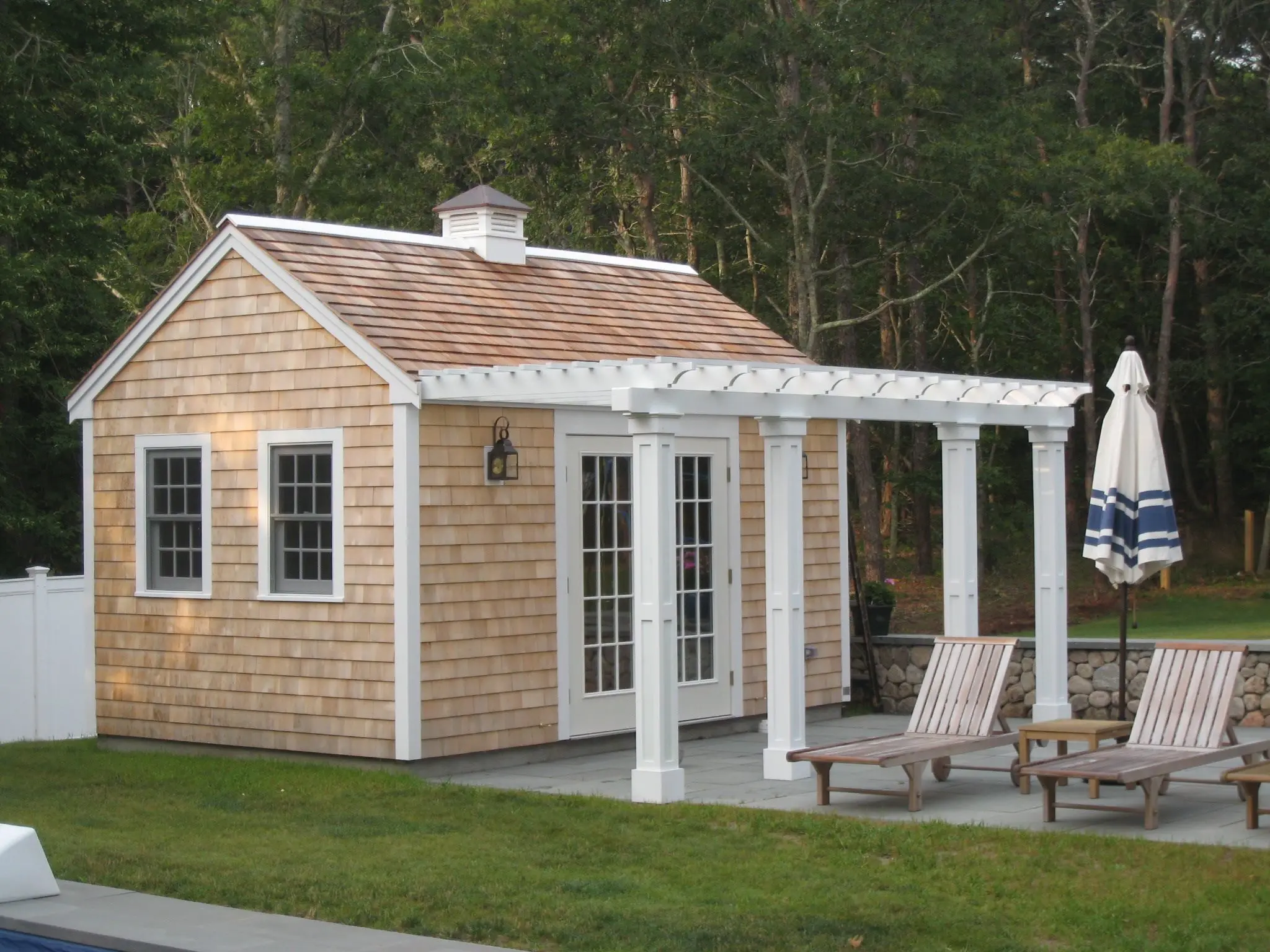
When Your House Runs Out of Room, Your Yard Can Be the Answer
Your garage is full. Your spare bedroom became an office, then a storage closet, and so on. The basement houses a treadmill buried under Christmas decorations. Meanwhile, your yard just sits there. Backyard buildings turn that unused space into something you’ll actually use: a place to work without interruptions, a studio where the mess stays contained, a gym you don’t have to drive to, dedicated storage for tools and equipment, or a wellness space that supports routines like yoga or meditation.
These aren't traditional sheds. They're standalone structures built for how people actually live, separated from the main house but close enough to matter.
What Backyard Buildings Are and Why Homeowners Choose Them
Standalone structures built for how you actually live.
A backyard building isn't just a place to store tools; it’s a space designed for regular use. Work happens there. Projects get finished there. You can finally have a dedicated space for fitness, hobbies, or quiet focus that stays set up and ready to use.
Homeowners choose these structures for separation. Work stays focused when it's not next to the laundry. Creative projects move forward when they’re not competing with dinner prep. Wellness routines stick when the space is designed specifically for them. Rather than renovating their homes, many homeowners are adding functional space outside. A dedicated structure in the yard creates a clear boundary between daily life and the activities that require focus.
See how these structures are used across real landscapes
Backyard Office Sheds for Work-From-Home Flexibility
Create boundaries that spare bedrooms can't.
A backyard office creates boundaries that spare bedrooms cannot. You walk out to work and walk back when you’re done. That short commute creates real psychological separation.
Why Dedicated Work Spaces Matter
Working from home erases the line between professional and personal. A backyard office restores it. No kids interrupting Zoom calls. No laundry staring at you while you're on deadline. No bed visible in the corner of your video frame. The cost comparison is blunt. Quality office sheds run $3,000 to $15,000, depending on size and features. Traditional home additions typically start at $50,000 and can exceed $100,000. Both give you a workspace, but one costs five times less and avoids major disruption.
Basic models handle seasonal use efficiently, and customized versions add insulation, electrical wiring, year-round climate control, and finishes that make the space permanent without the permit complexity.
Explore customizable small buildings that work as offices or flexible workspaces
Tax Benefits and Property Value
Self-employed owners may be able to deduct expenses if the space is used strictly for work, including part of the build cost, utilities, and property taxes. The requirement is exclusive business use; the space cannot double as a guest room or storage area. Professional tax guidance is essential before making assumptions.
Well-built office sheds can make properties more attractive to buyers who value separate workspaces, though the real benefit is often seen in buyer interest and marketability rather than a guaranteed dollar amount.
Backyard Studios for Creative, Work, and Flex Spaces
Physical separation creates the focus that creative work needs.
Studios are built for uninterrupted focus. They support projects that need room to breathe, from pottery and painting to plant arranging, music practice, photography, or writing.
Backyard Pool Houses for Entertaining, Storage, and Changing Space
Keep wet towels and chlorine smells where they belong.
Pool houses solve the wet towel problem, keep chlorine smells out of your hallway, and provide shade for guests without crowding your kitchen. They also store pool equipment, floats, and seasonal furniture where you can easily find them instead of scattering them throughout the yard. Standard pool house structures handle storage and shade efficiently. Custom designs add enclosed changing areas, weatherproof seating zones, lighting that extends use beyond sunset, and features that work beyond swim season so the structure remains useful year-round.
Small Pool Houses That Maximize Function Without Overpowering the Yard
A small pool house delivers value without dominating the space. Compact layouts prioritize efficiency with a bench for changing, hooks placed where wet towels actually land, storage built for what you use most. Scale matters on smaller properties. Thoughtful proportions make the footprint intentional instead of crowded. The structure supports the pool experience without becoming the focal point. Beyond summer, pool houses work as outdoor entertaining hubs. They provide shelter during gatherings. They store outdoor furniture and cushions through winter. Some incorporate outdoor kitchens or bars that keep mess contained and guests comfortable year-round.
Backyard Gyms and Wellness Spaces for At-Home Fitness
No commute. No waiting. No strangers' sweat on your equipment.
Many of our standard structures work well for housing exercise equipment and creating dedicated workout zones. Custom interiors add rubber flooring that protects joints, mirrors that check form, and ventilation that prevents the space from becoming a sweatbox. Either way, placing fitness outdoors increases use. The separation turns workouts from chores into appointments you keep.
Wellness spaces extend beyond weight racks. Homeowners add meditation corners, yoga studios with proper flooring, and cold plunge setups that don't require bathroom remodeling. The distance from household bustle creates an environment where fitness routines stick. Ventilation and natural light make backyard gyms work better than basement setups. Temperature control affects comfort and equipment longevity. Windows and proper airflow address issues that basement conversions can't resolve without expensive HVAC work.
Outdoor Storage Buildings for Tools, Equipment, and Seasonal Items
Free up your garage and protect what you own.
Storage buildings protect tools, bikes, landscaping equipment, and seasonal furniture while freeing up garage space. They keep holiday decorations accessible but out of sight. They give sports gear a home that isn't random.
Our standard Pine Harbor designs balance durability with a classic look that feels like it naturally belongs in your landscape. Pine Harbor structures are designed to blend into residential landscapes while providing practical space for work, storage, and hobbies. These buildings work especially well on properties where space is limited and every square foot needs to work efficiently.
Backyard Wellness Spaces for Yoga and Meditation
A private retreat for your practice. No noise from the house. Just the quiet you need.
A backyard studio creates a boundary that a spare bedroom cannot. It offers a private retreat for yoga, exercise, or meditation, away from the bustle of the main house. These structures provide the quiet and natural light needed to actually stick to a wellness routine.
While Pine Harbor sheds are not intended as full residential living spaces, they are well suited for creating a high-quality standalone room for hobbies, wellness routines, or focused work. Adding insulation and climate control makes these spaces comfortable year-round, turning your yard into a destination for relaxation.
Learn more about custom structure options
Choosing the Right Backyard Structure Based on Space, Use, and Lifestyle
Start with honest questions about how often you'll actually use it.
Start with honest questions. How often will you actually use this? This determines which structure makes sense. Occasional storage or seasonal needs call for standard options. Year-round work, creative use, or wellness routines benefit from customization that addresses climate, layout, and utilities. Continue asking practical questions to guide decisions: does seasonal weather limit year-round functionality? Do utility connections require expenses that change the math? Does the structure need to align with the existing architecture, or can it stand on its own?
Assessing Your Property and Needs
Several factors determine which structure works. Yard size sets footprint limits. Local zoning and setback requirements affect placement, sometimes dramatically. Existing landscaping and sight lines influence options. Budget constraints force choices between ideal and achievable. Successful projects begin with clear use cases, not vague aspirations. "I need a place to work without interruptions" beats "I'd like more flexible space." Specificity prevents expensive mistakes.
Current trends favor multi-functional spaces over single-purpose structures. An office today might become a studio tomorrow or a wellness retreat eventually. Electrical rough-ins, insulation, and thoughtful proportions preserve options without overbuilding for scenarios that might never happen. Start by reviewing ready-made options and exploring standard designs.
Explore ideas and get inspiration
Planning Your Backyard Building With Walpole
Tell us your vision. We'll help you nail down the details and make it real.
Every Walpole backyard building starts with understanding how you'll use the space. Some homeowners arrive with clear plans. Others refine ideas through conversation and design work. Starting by reviewing ready-made options and exploring standard designs. If your project needs a tailored solution, a custom design allows the structure to reflect your space and long-term goals. We talk through how you'll use it. Walk the property. Look at sun angles, access points, and where utilities run. Figure out what works before anything gets built. The goal is a structure that belongs there, not something that looks like it landed from another yard.