

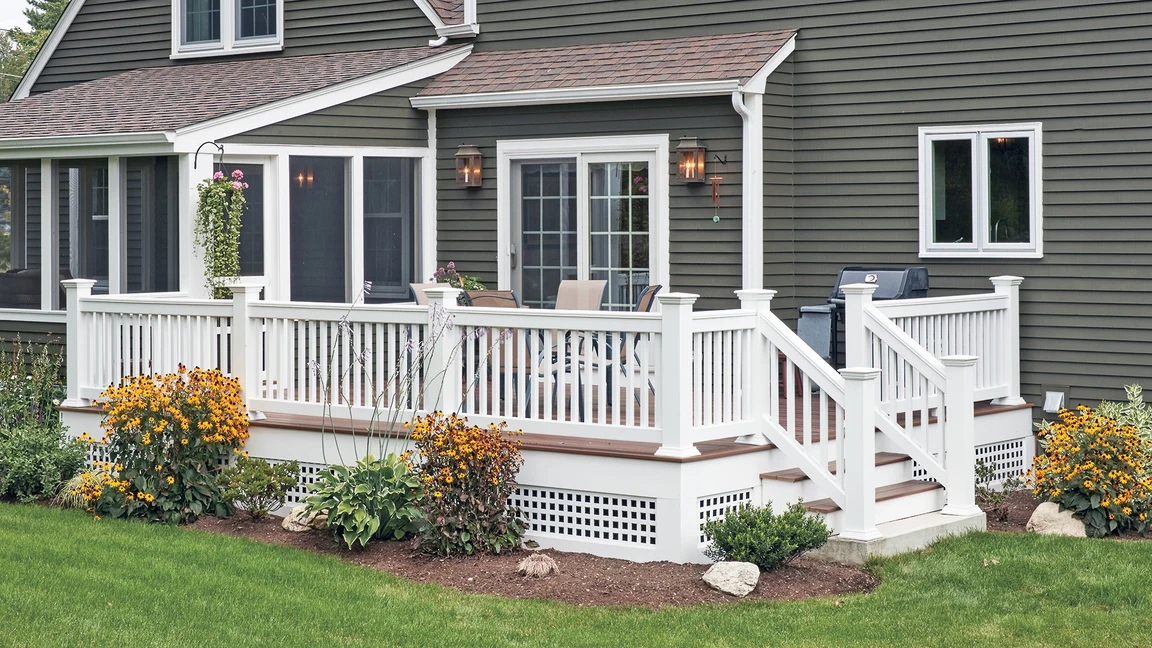
How to Choose the Right Deck Railing Material for Long-Term Performance and Design
Most people treat deck railings as an afterthought – the last but least considered step in their outdoor architectural design. The structure is complete, and the railing becomes a secondary decision. That is where mistakes happen.
A deck railing is not just a finishing detail. It’s a structural and visual boundary that shapes how the entire outdoor space feels and functions. The right material holds its structure, maintains its appearance over time, while aligning with the home’s broader architectural choices.
Most homeowners begin by searching for “deck railing materials” – comparing wood, aluminum, and vinyl options. This guide explains how those materials perform, and what to look for in a railing system designed for long-term durability.
What Deck Railing Is and Why Material Choice Matters
When evaluating deck railing options, most homeowners consider wood, aluminum, and vinyl railing systems. Each material offers different benefits, but also comes with trade-offs in durability, maintenance, and long-term performance. Because of these trade-offs, some railing systems are engineered to combine materials for improved performance rather than relying on one material alone.
Wood Deck Railing: Traditional Look with Ongoing Maintenance
Wood deck railing is often chosen for its natural appearance and traditional detailing. However, exposure to moisture, sun, and seasonal temperature changes can lead to warping, cracking, and rotting over time. Maintaining wood railings requires ongoing sealing, staining, or repainting to preserve both appearance and structural integrity.
Aluminum Deck Railing: Durable but Limited in Application
Aluminum deck railing is known for its strength and resistance to moisture. It does not rot or warp and requires minimal maintenance. It is often used in modern designs due to its clean lines, but can feel more limited within traditional architectural design applications. In many high-performance systems, aluminum is used internally for reinforcement rather than as the primary visible material.
Vinyl Deck Railing: Low Maintenance with Varying Performance
Vinyl deck railing is typically associated with low maintenance and reliable appearance, but performance varies depending on quality. Lower-grade vinyl can become brittle, fade, or lose structural integrity over time. Higher-quality systems improve durability, but not all vinyl products are built for long-term structural performance. Vinyl products can be a good mid to long term low maintenance option for homeowners who are less concerned with premium visual aesthetics.
Walpole Deck Railing Systems: Solid Cellular PVC with Aluminum Reinforcement
Walpole Outdoors railings are built using solid cellular PVC with aluminum reinforcement, this is the only material system used across their railing designs. This construction is designed to maintain long-term structural integrity and visual consistency. The solid cellular PVC exterior resists moisture, rot, insects, and environmental wear, while the internal aluminum reinforcement adds strength and helps prevent movement.
Walpole offers two signature railing styles:
ㅤ●ㅤJamestown Railing: Features bold, defined top and bottom rails with aluminum reinforcement in the top rail. Includes 1½'' square pickets and a Yorktown cap, available in 3' and 3.5' heights.
ㅤ●ㅤPendleton Railing: Designed with a thinner, more modern profile. Includes aluminum reinforcement in bottom rail for added structural support, along with 1½'' square pickets and a Yorktown cap, available in 3' and 3.5' heights.
This reinforcement is integrated within the rails, bottom rail only for Pendleton, and both top and bottom rails for Jamestown, helping improve long-term structural stability. Rather than offering multiple material types, Walpole focuses on refining a single system to deliver durability, low maintenance, and architectural consistency.
Deck Railing Styles and Design Considerations
Deck railing styles are shaped by both system design and architectural intent. Walpole’s Jamestown and Pendleton styles are designed to complement different home styles, from more traditional to more modern applications. The goal is for the railing to feel integrated into the architecture, rather than added after the fact.
Porch Railing Designs and Deck Integration with the Home
Porch railing designs and deck railings should align with the architecture of the home. Traditional homes benefit from more detailed profiles, while modern homes pair better with cleaner, more minimal systems.
Deck Railing Installation: What Homeowners Should Know
Proper deck railing installation is critical to long-term performance. Even the best material will fail if posts are not anchored correctly, spacing is inconsistent, or connections are weak. Each material, and each home, requires a different installation approach, making professional installation essential.
In many cases, long-term performance issues are not caused by the material itself, but by improper installation. Movement at connection points, uneven load distribution, and poor anchoring can shorten the lifespan of even the most durable systems and materials. This makes installation quality just as important as material selection.
Comparing Deck Railing Options by Maintenance, Cost, and Lifespan
When comparing deck railing materials over time, differences become clear. Wood requires the most maintenance, aluminum provides strong durability, while standard vinyl varies in performance and aesthetic. Systems built with solid cellular PVC and aluminum reinforcement are designed to provide consistent long-term performance with minimal upkeep.
Best Deck Railing Material by Use Case
Choosing the right Walpole railing system comes down to how the space will be used and how the railing will integrate with the architecture of the home.
ㅤ●ㅤFor traditional homes: The Jamestown's bold rail profiles and defined top and bottom detailing complement classic architectural styles. The aluminum reinforcement in both rails provides added structural depth that matches the visual weight of the design.
ㅤ●ㅤFor modern or transitional homes: The Pendleton's thinner, cleaner profile pairs well with contemporary architecture. Its reinforced bottom rail provides structural support while keeping the overall look minimal.
ㅤ●ㅤFor long-term low maintenance: Both styles are built from solid cellular PVC, requiring no painting, sealing, or staining, and no ongoing upkeep beyond routine cleaning.
ㅤ●ㅤFor structural performance: The integrated 1"×2" aluminum reinforcement within the rails, both top and bottom on the Jamestown, bottom only on the Pendleton, provides long-term stability that standard vinyl or wood systems cannot match.
Custom Outdoor Railings vs Standard Railing Systems
Standard railing systems are designed for common layouts. Custom outdoor railings are designed to match the architecture and layout of a specific home. Walpole railing systems are designed to integrate seamlessly into the overall property, ensuring consistency in proportion, material, and aesthetic.
How to Choose the Best Deck Railing for Your Outdoor Space
The best deck railing system for your space depends on how the space is expected to perform over time. Rather than choosing between materials alone, the focus should be on durability, structural stability, and how the railing integrates with the home layout. Don’t forget to consider external factors such as weather, temperature, and other outdoor elements.
A deck railing defines the structure and function of an outdoor space. Choosing the right system ensures long-term durability, consistency, and alignment with the home.