

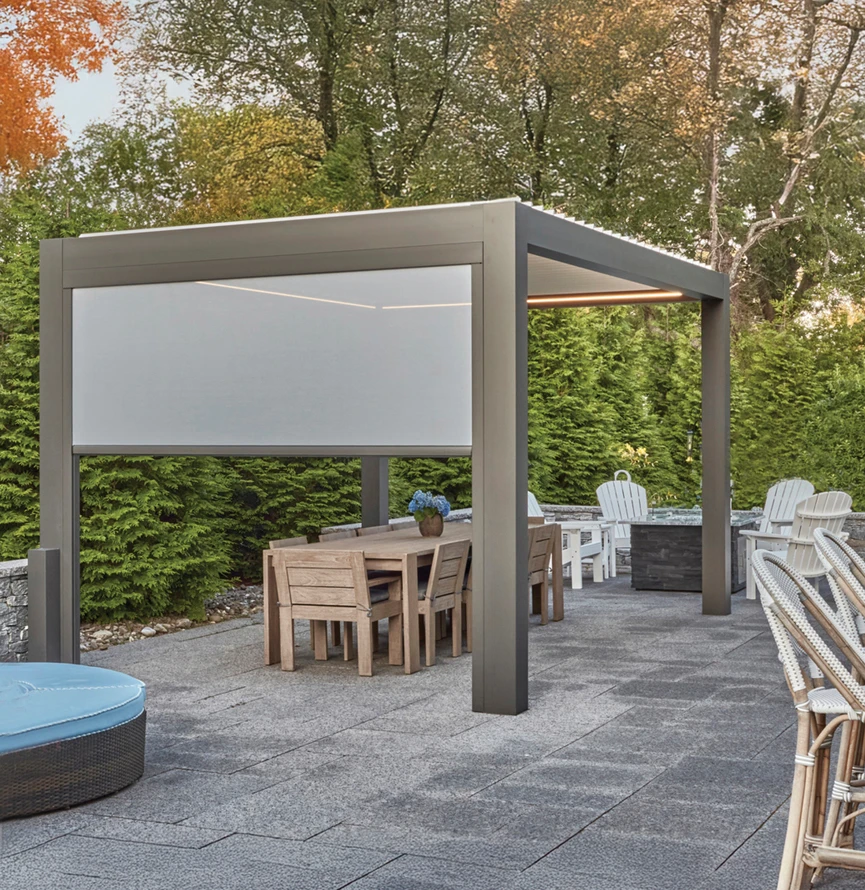
Clean Lines, Structural Clarity, and a More Intentional Way to Define Outdoor Space
All modern pergolas evoke a feeling the moment you step underneath one. Not because they are more decorative than earlier designs, but because they feel more intentional. There is no excess detail, no unnecessary ornamentation, just structure, proportion, and alignment working together.
A pergola is an open-air structure built with vertical posts and an overhead framework, designed to create shade and define outdoor living areas. Today, a modern pergola goes beyond structure alone, integrating technology and functionality to control light, shade, and weather conditions. This includes systems that adjust to changing conditions, allowing outdoor spaces to be used more consistently throughout the day and across seasons. When it is done correctly, it does not feel like something added to the yard. It feels like part of the architecture itself.
What Defines a Modern Pergola and Why It’s Shaping Outdoor Design
A modern pergola is defined by how it performs. Clean lines and proportion still matter, but today’s designs also integrate systems that control light, shade, and weather. Where traditional pergolas rely on curves and decorative elements, modern pergola design relies on proportion and precision. Clean lines, balanced spacing, and alignment with the geometry of the home define the structure. Nothing is added unless it serves a purpose.
In today’s outdoor spaces, that purpose increasingly includes performance. Modern pergolas are designed not just to define space, but to adapt to how the space is used, through integrated systems that manage light, airflow, and weather protection.
Modern Pergola Designs vs Traditional Pergola Styles
At first glance, modern pergola designs appear minimal. In reality, they are far less forgiving than more decorative structures. Without ornament to hide behind, every detail becomes visible. Posts that are too narrow feel underbuilt. Beams spaced inconsistently disrupt rhythm. Even slight misalignment becomes noticeable.
Traditional pergolas rely on fixed overhead beams, offering partial shade and structure. Modern pergolas expand on this by introducing adjustable systems, such as louvered roofs, that allow the structure to respond to changing conditions. Walpole Outdoors pergolas are designed to integrate cohesively into whatever aesthetic you use to define your outdoor space.
Luxury Pergolas and Designer Pergola Aesthetics
The shift toward luxury pergolas is not about adding complexity, it is about refining proportion and material. Designer pergolas are defined by precise scale relative to the home, clean transitions between indoor and outdoor spaces, and consistent material application across the property.
In addition to design, luxury pergolas are now defined by integrated features—such as lighting, motorized screens, and adjustable roof systems, that enhance how the space functions throughout the day and across seasons.
Modern Pergola Materials and Performance
Material plays a critical role in both appearance and long-term performance. Rather than focusing on traditional wood options, modern pergolas are built using materials designed for durability and consistency.
Walpole Outdoors pergolas are built using two primary material systems:
ㅤ●ㅤAluminum pergolas, such as the Ambiance Pergola, designed to support integrated technology and precision engineering
ㅤ●ㅤSolid cellular PVC pergolas, such as the Lockhart Pergola, offering a clean, architectural appearance with minimal maintenance
These materials are selected to maintain structure, resist environmental wear, and support long-term performance without the maintenance demands of traditional wood.
Pergola Roof Options: Beams vs Louvered Systems
The overhead structure is what defines how a pergola functions. Traditional pergolas use fixed beams to create filtered light and maintain airflow. Modern systems, such as Walpole Outdoors’ Ambiance Pergola, use a motorized louvered roof system that allows the structure to shift between open-air and fully covered. When closed, the louvers create a watertight seal, allowing the space to be used in rain, direct sun, and changing weather conditions.
Louvered Pergola Roofs and Adjustable Shade Control
A louvered pergola roof introduces control. Pergolas with adjustable louvers allow the overhead structure to respond to changing weather conditions. Open louvers increase light and airflow. Closed louvers provide shade and protection. Optional motorized zip screens enclose the sides of the pergola, offering 10% transparency for visibility while controlling sunlight, wind, rain, and glare. Available in five fabric colors, White, Beige, Grey, Bronze, and Black, they provide UV and heat protection and are independently tested for durability.
Modern Pergola Lighting Ideas for Day-to-Night Use
Lighting extends the function of a pergola beyond daylight hours. The most effective pergola lighting ideas are integrated into the structure rather than added after installation. Ambiance Elite pergola systems incorporate built-in LED lighting that is seamlessly integrated into beams and structural elements, providing consistent illumination without disrupting the design.
Custom Pergola Design vs Standard Pergola Options
Pergola kits are designed for standard applications, while more advanced pergola systems allow for greater alignment with the home and integration of features such as lighting, screens, and adjustable roof systems.
Modern Outdoor Pergolas for Patios, Pools, and Entertaining
A modern outdoor pergola organizes space without enclosing it. It can define a dining area, create structure around a pool, or establish a transition between the home and landscape. With added control over light, shade, and weather, modern pergolas allow these spaces to be used more consistently and with greater flexibility.
How to Choose the Right Modern Pergola for Your Outdoor Space
Choosing the right modern pergola comes down to alignment. The structure should reflect the architecture of the home, match the scale of the space, and perform consistently over time. This includes evaluating how the pergola will be used, whether for shade, full weather protection, or extended outdoor living, and selecting a system that supports those needs through both design and functionality.
Modern pergolas work because they do more, while maintaining precision in design. They define space without enclosing it, add structure without adding weight, and create order in outdoor areas. With integrated features such as adjustable louvers, lighting, and shade systems, modern pergolas extend how outdoor spaces function, allowing them to be used more consistently and as true extensions of the home.