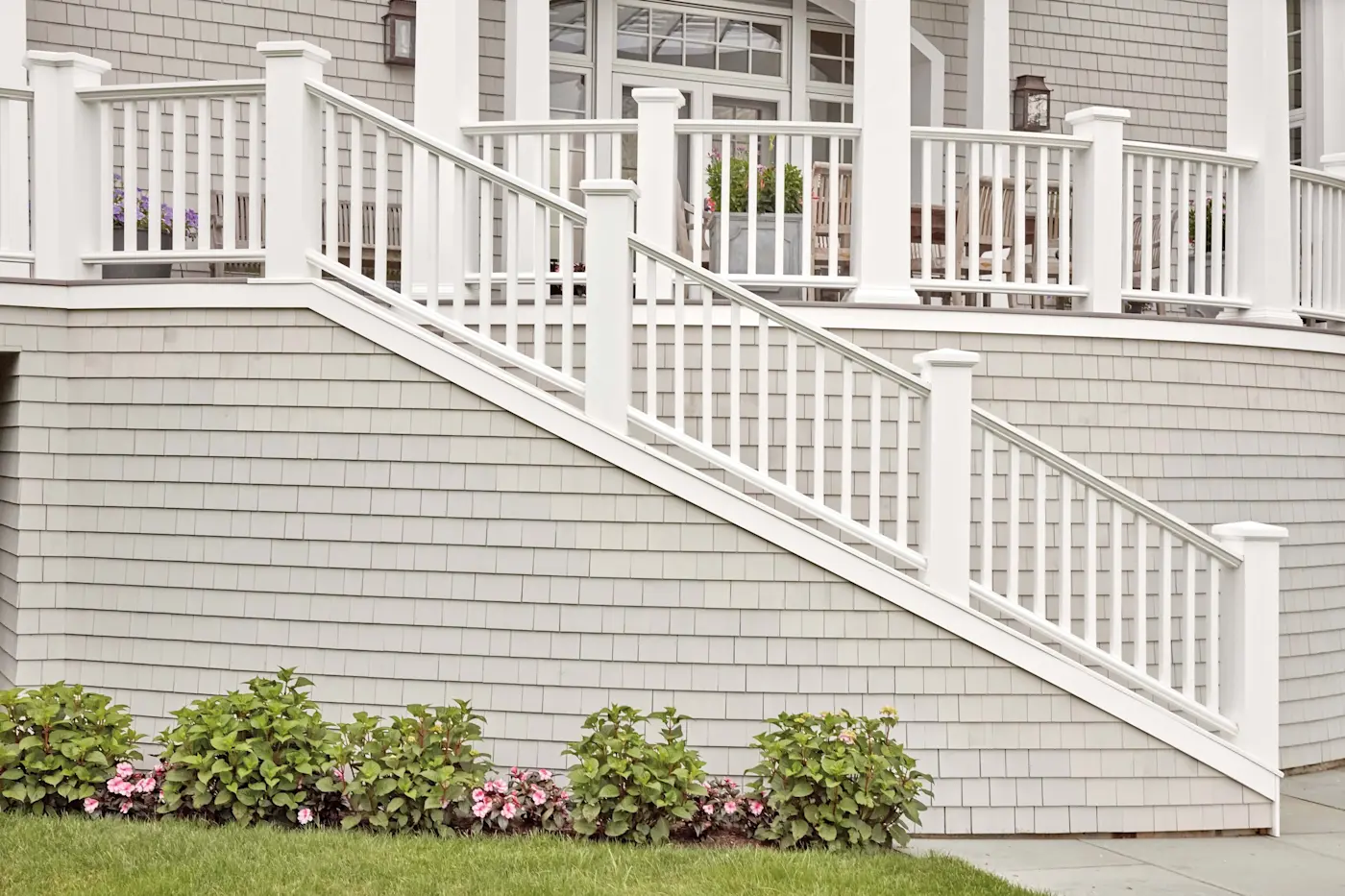
What Outdoor Railings Do and Why Material Choice Matters
Safety, Structure, and Exterior Character
Outdoor railings do more than complete a deck, porch, balcony, or stairway. They help define the edge of an outdoor space, provide essential support, and shape how the exterior of a home is experienced. The right outdoor railings bring both safety and architectural character to the property, creating a finished look that feels connected to the home and landscape.
Material choice matters because outdoor railings are exposed to sun, rain, wind, humidity, and changing temperatures every day. In coastal settings, salt air adds another layer of exposure. Walpole Outdoors offers secure, stylish outdoor railings designed for porches, balconies, pools, terraces, decks, and exterior spaces where durability and design both matter.
Exterior Railings vs Interior Railings: What Makes Outdoor Systems Different
Built for Exposure
Exterior railings face conditions interior railings never have to manage. Interior railings are protected from weather, direct sun, wind-driven rain, and salt-air exposure. Outdoor railing systems must be designed with exterior performance in mind from the beginning.
The difference is not just material. Exterior railings also need proper proportion, secure installation, thoughtful drainage, and a finish that can stand up to the environment. A porch railing, stair railing, balcony railing, or deck railing should look refined, but it also needs to perform through changing seasons.
That is why exterior railings should be selected as part of the larger outdoor plan. The railing should complement the architecture, align with nearby fencing or gates, and support the way people move through the space. Walpole Outdoors’ standard railing designs offer a helpful starting point for homeowners comparing exterior railing styles and profiles.
Outdoor Railing Systems Designed for Coastal Environments
Strength Where Weather Matters
Outdoor railing systems in coastal environments need to be more than attractive. They should be selected with moisture, salt air, high humidity, and strong sunlight in mind, using materials and construction appropriate for the property’s level of exposure. This is especially important for beach homes, waterfront porches, pool areas, decks, balconies, and stairs exposed to open air.
A well-designed railing system should feel integrated into the architecture. It should define the edge of the space without blocking the view or overpowering the home. In coastal settings, that often means clean lines, durable materials, and proportions that feel open, balanced, and light. For homes with a more modern coastal profile, Walpole Outdoors’ Pendleton Railing offers a clean, refined look that complements buildings with more contemporary architecture. Its simpler profile can help exterior railings feel polished without becoming visually heavy.
Weather-Resistant Outdoor Railings for Salt-Air Exposure
Selected for Long-Term Exterior Performance
Weather-resistant outdoor railings are especially important in salt-air environments. Coastal homes face a steady combination of moisture, wind, sun, and salt, all of which can affect how materials age. Railings in these settings should be selected for long-term performance as much as appearance.
Salt exposure can be hard on exterior finishes. The right railing should be built from materials suited to outdoor conditions, with details that help maintain its structure and visual appeal over time. Smooth surfaces, durable components, and a thoughtful finish can help preserve a clean, finished appearance.
Design also plays a role. Open railing profiles can feel more appropriate in coastal areas because they allow light, air, and views to move through the space. Walpole Outdoors’ outdoor railing inspiration gallery shows a range of railing applications across porches, balconies, terraces, stairs, and coastal properties.
Wood, PVC, and Composite Railings Compared
Materials with Different Strengths
Wood railings bring natural warmth and a familiar architectural quality to the exterior. They can feel traditional, coastal, rustic, or refined depending on their shape, finish, and surrounding materials. Wood works especially well when the railing is meant to feel connected to trim, decking, fencing, or other architectural details.
Solid cellular PVC railings offer a clean, painted look with lower maintenance requirements than many traditional wood options. Solid cellular PVC can be a strong choice for homeowners who want crisp profiles, consistent performance, and a finish that feels at home on porches, decks, balconies, and stairs.
Composite railings are often considered for their durability and lower upkeep. They can work well in exterior settings where homeowners want a more stable material that resists some of the common maintenance demands associated with wood. The right choice depends on the home’s style, exposure, and desired long-term look.
Homeowners may encounter wood, solid cellular PVC, aluminum, and composite railing systems when comparing exterior options. Walpole Outdoors offers architectural railing designs crafted from solid cellular PVC. Select Walpole Outdoors railing designs also feature internal aluminum reinforcement for added strength and structural integrity. For homeowners comparing materials, Walpole Outdoors’ standard railing designs are a strong place to begin.
Outdoor Railings and Architectural Design Options
A Railing That Fits the Home
Outdoor railings can help a deck, porch, balcony, pool area, or terrace feel more connected to the architecture. Instead of treating railings as a separate feature, a thoughtful railing approach considers the home’s proportions, trim, columns, stairs, gates, and surrounding outdoor structures.
A traditional property may call for a more detailed railing profile. A coastal home may benefit from a clean, open style that preserves views. A modern home may need simpler rails with a more restrained silhouette. The right railing should feel intentional from every angle.
Walpole Outdoors offers contemporary and historical railing designs, along with standard railings and caps that can complement existing architecture. For homeowners comparing outdoor railings for a porch, balcony, pool, or terrace, Walpole Outdoors’ railing inspiration gallery provides a helpful view of design possibilities.
Outdoor Railing Design Ideas for Decks, Porches, and Stairs
Details That Shape the Space
Outdoor railing design ideas should begin with the way the space is used. A deck railing needs to define the edge of an outdoor living area. A porch railing should feel connected to columns, trim, steps, and the front of the home. Stair railings need to support movement while reinforcing the overall design.
The most successful railing designs feel integrated. They do not simply close off a space; they frame it. Railings can make a deck feel more finished, give a porch a stronger architectural rhythm, or help a stairway feel safer and more complete.
For a bolder traditional profile, Walpole Outdoors’ Jamestown Railing brings defined rails and a strong, structured look to decks and exterior spaces. For a more modern impression, Pendleton Railing offers a slimmer, cleaner profile that works well with more contemporary architecture.
Maintenance, Longevity, and Long-Term Value in Coastal Railings
Performance Over Time
Outdoor railings should be selected not only for how they look at installation, but for how they will perform year after year. In coastal climates, that long-term view is especially important. Salt air, moisture, sunlight, and seasonal weather can all affect how railings age.
Low-maintenance materials can help reduce upkeep while preserving a finished exterior appearance. Wood may offer a warmer, more traditional feel, but it generally requires more attention over time. Solid cellular PVC and similar exterior-grade materials can help homeowners maintain a clean, painted appearance with less ongoing maintenance than many traditional wood options.
Longevity also depends on design quality. A well-proportioned railing will continue to support the home’s architecture even as styles change. A railing chosen only for short-term appearance may feel dated or disconnected more quickly. Walpole Outdoors’ standard railing designs offer durable, architectural options for homeowners thinking beyond the first season.
How to Choose the Right Outdoor Railings for Coastal Homes
A System That Belongs to the Architecture
Choosing the right outdoor railings begins with the home itself. Start with the setting: deck, porch, balcony, terrace, stairway, pool area, or coastal overlook. Then consider exposure, material, profile, maintenance, and how much visual openness the space needs.
For coastal homes, durability and design should work together. The railing should be selected with the surrounding environment in mind while still feeling appropriate to the architecture. A traditional beach home may call for a classic porch railing. A modern waterfront property may benefit from a cleaner system with slimmer lines. A pool terrace may need something secure, refined, and easy to maintain. For homeowners comparing options, Walpole Outdoors’ railings inspiration gallery can help identify styles that fit the home, the landscape, and the desired level of openness.
Outdoor Railings Bring Safety, Structure, and Lasting Exterior Character
A Lasting Part of the Home
Outdoor railings work because they serve more than one purpose at once. They provide support, define edges, guide movement, and add character to decks, porches, balconies, stairs, pool areas, and terraces.
The right exterior railings do not simply meet a practical need. They shape the experience of the outdoor space, reinforce the home’s architecture, and create a more finished presence from the outside. With the right material, profile, and design approach, outdoor railings become part of the home’s long-term exterior character.
Explore Walpole Outdoors’ standard railing designs, Jamestown Railing, Pendleton Railing, and railing inspiration gallery to find a railing system that fits the architecture, supports the space, and stands up to the elements.