
What Sets a Pergola, Arbor, and Trellis Apart
Three Structures, Three Purposes
Pergolas, arbors, and trellises are all outdoor garden structures, but they serve different purposes, work at different scales, and belong in different parts of the landscape. Choosing the right one starts with understanding what each structure does and where it works best.
An arbor is a freestanding, arched entryway used to frame a passage or garden entrance. A pergola is a larger, roofed outdoor room designed for gathering and shade. A trellis is a flat, 2D panel used solely to support climbing plants along a wall or fence. Each has a distinct role in the garden, and the right choice depends on the space, the goal, and the architecture of the home.
What Is an Arbor?
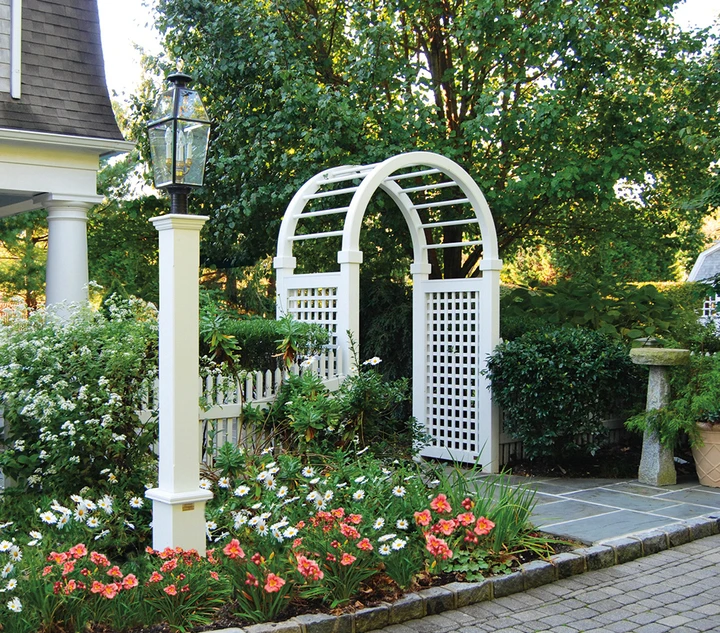
An arbor is a freestanding outdoor structure that creates a defined passage, entrance, or focal point in a garden. Most arbors are built with vertical posts and an overhead element, often with lattice, beams, or an arch that supports climbing plants and adds structure to the landscape.
A well-placed arbor does more than decorate a yard. It creates a moment of arrival. It can frame a walkway, mark the entrance to a garden, support vines, or turn a quiet corner into a more intentional outdoor space. Walpole Outdoors offers a range of standard arbor designs designed to frame entrances, support climbing plants, and bring lasting architectural character to the landscape. For a deeper look at arbor design and placement, see What Is an Arbor?.
What Is a Pergola?
A pergola is a larger outdoor structure built with four or more posts supporting an open overhead framework of beams and rafters. It is designed to define an outdoor living area rather than create a passage or mark an entrance. Pergolas work well over patios, decks, garden terraces, and outdoor dining areas where the goal is to create a sense of enclosure without fully closing off the space.
Unlike an arbor, a pergola is meant to be gathered beneath rather than walked through. It creates shade, frames a view, and gives an outdoor space a more permanent, architectural presence. For more on how pergolas work and where they belong in the landscape, see What Is the Purpose of a Pergola? Walpole Outdoors offers a range of pergola designs built for lasting exterior character.
What Is a Trellis?
A trellis is a flat or freestanding framework, typically made from wood, vinyl, or metal, designed to support climbing plants along a wall, fence, or garden boundary. Unlike an arbor or pergola, a trellis is not a structure people pass through or gather beneath. It functions as a surface for vertical growth, adding texture, privacy, and seasonal color to the garden.
Trellises work especially well against exterior walls, along fence lines, beside garden beds, or as screening elements between outdoor spaces. Walpole Outdoors offers lattice panels and trellis designs crafted from solid cellular vinyl for lasting exterior performance.
Pergola vs Arbor vs Trellis: Side-by-Side Comparison
| Arbor | Pergola | Trellis | |
|---|---|---|---|
| Primary purpose | Passage, entrance, focal point | Outdoor living area | Plant support, screening |
| Scale | Intimate, walkway-width | Large, room-defining | Flat panel or freestanding frame |
| Walk through | Yes | Rarely | No |
| Supports climbing plants | Yes | Sometimes | Yes |
| Best placement | Garden entry, walkway, gate | Patio, deck, terrace | Wall, fence, garden border |
Garden Arbor vs Trellis: Key Differences Explained
Structure, Support, and Passage
The difference between an arbor and a trellis comes down to structure and use. A trellis is usually a flat or wall-mounted framework designed to support climbing plants. An arbor is typically freestanding and large enough to walk through or use as an entrance.
An arbor trellis can bring both ideas together, using lattice or trellis panels within the arbor structure to support vines while still creating a defined passage. If the goal is vertical growth on a wall, lattice panels may be enough. If the goal is an entry, walkway, or garden focal point, an arbor is the stronger choice.
Common Types of Garden Arbors and Their Uses
From Entry Points to Garden Rooms
A garden arbor can be simple, formal, romantic, or highly architectural depending on its shape and placement. Some arbors are designed as gateways. Others create a shaded bench area or outline a small garden retreat. The right design depends on whether the arbor is meant to guide movement, support planting, or create a visual anchor.
For homeowners exploring different garden arbor styles, Walpole Outdoors offers a wide range of standard arbor designs, including classic arches, gateway arbors, bench arbors, and lattice-topped options. Browse the arbor inspiration gallery to see how each style works in the landscape.
Arched Arbors, Walkway Arbors, and Entrance Designs
Creating a Clear Point of Arrival
An arbor arch is one of the most recognizable architectural designs. It softens the landscape, draws the eye forward, and gives a path or garden entrance a more graceful sense of movement. An arched arbor can feel especially natural over a walkway, where the curve creates a framed transition from one space to the next.
For a more structured arbor entrance, a Classic Gateway Arbor can define garden paths and walkways with a pergola-style top. A Single Arch Arbor can create a simpler focal point for an entry or walkway.
Arbors for Climbing Plants and Vertical Growth
Structure for Vines, Flowers, and Greenery
An arbor for climbing plants brings architecture and planting together. The structure gives vines a place to grow upward, while the plants soften the arbor over time. This can create shade, texture, fragrance, and seasonal color.
Climbing plants for arbors should be chosen based on the structure's strength, sun exposure, and the amount of maintenance the homeowner wants. Roses, wisteria, honeysuckle, jasmine, and clematis are common choices, but each grows differently. A clematis arbor can feel delicate and colorful, while heavier vines may require a more substantial support system, such as Walpole Outdoors' Arched Arbor or Sheffield Arbor.
Wooden Arbors and Natural Material Options
Warmth, Texture, and Garden Character
A wooden arbor brings natural warmth to the garden. Wood feels familiar in the landscape because it sits comfortably alongside plants, stone, gravel, hedges, and fencing. A wood garden arbor can feel rustic, traditional, coastal, or refined depending on its profile and finish.
A solid cellular vinyl arbor is often chosen for its natural character and garden-friendly appearance. Like any exterior wood structure, it should be selected and maintained with long-term exposure in mind. For homeowners who want a garden arbor with a more architectural presence, Walpole Outdoors' arbor inspiration gallery shows how proportion and craftsmanship matter as much as the material itself.
Vinyl Arbors and Low-Maintenance Alternatives
Clean Form with Less Upkeep
A solid cellular vinyl arbor offers a clean, finished look with less maintenance than many traditional wood options. It can work especially well for homeowners who want crisp lines, a painted appearance, and consistent performance over time.
Solid cellular vinyl can also support classic garden design. Walpole Outdoors' Spindle Top Arbor, for example, features lattice side panels and provides a strong option for gardens, walkways, and climbing plants. A solid cellular vinyl garden arbor offers the visual structure of painted wood while reducing the upkeep required over time.
Arbor Aesthetics and Design Styles for Different Landscapes
Matching the Home and Garden
Arbor aesthetics should begin with the architecture of the home. A traditional property may call for a curved arch, lattice panels, or a more formal gateway. A coastal garden may benefit from a white arbor with clean detailing. A more contemporary landscape may need a simpler silhouette with less ornament.
Decorative garden structures work best when they feel connected to the larger property. A Secret Garden Arbor can create a more enclosed and romantic garden moment, while a Sheffield Arbor brings a more refined architectural presence with its elliptical arch and keystone detail.
Where to Place an Arbor for Maximum Visual Impact
Placement That Gives the Garden Direction
An arbor for garden design should be placed where it can define movement or create emphasis. Common locations include the start of a walkway, the entrance to a garden, the transition between outdoor rooms, or the edge of a fenced enclosure.
An arbor walkway can guide people through the landscape, while an arbor entrance can make a garden feel more private and complete. Placement matters because an arbor should feel intentional. It should appear where the landscape naturally wants a pause, a threshold, or a framed view.
How Arbors Fit Into Larger Outdoor Garden Structures
Connecting Fences, Gates, Paths, and Plantings
An arbor can stand alone, but it often works best as part of a larger outdoor plan. It can connect to fencing, pair with a gate, frame a path, or sit within a larger garden enclosure. In that role, the arbor becomes part of the architecture of the property.
When paired with fencing or lattice, an arbor can help organize the landscape without fully closing it off. It creates structure, but still allows light, air, and planting to move through the space. Walpole Outdoors' Classic Gateway Arbor is designed for gardens and walkways where a defined entrance is part of the larger landscape plan.
How to Choose Between a Pergola, Arbor, or Trellis
Choosing the right structure begins with choosing its purpose. If the goal is to mark an entrance, frame a walkway, or create a garden focal point, an arbor is the right choice. If the goal is to define a larger outdoor living area with shade and architectural presence, a pergola fits better. If the goal is vertical plant support, privacy screening, or adding texture along a wall or fence, a trellis is the most practical option.
A small garden may need a simple arched arbor. A formal outdoor living space may call for a pergola. A planting-focused space may benefit from lattice panels or an arbor trellis combination. The right structure should feel like it belongs to the home and landscape, not added as an afterthought.
For homeowners comparing styles and materials, Walpole Outdoors' standard arbor designs include arched, gateway, lattice, bench, and garden-focused options.
Pergola, Arbor, or Trellis: Each Structure Has a Clear Purpose
Pergolas, arbors, and trellises each serve a different role in the outdoor landscape. A pergola defines and shelters a living space. An arbor frames an entrance or walkway. A trellis supports vertical growth along a wall or boundary. The right choice depends on the goal, the scale of the space, and the architecture of the home.
With the right placement, material, and design, any of these structures can become a lasting part of how the outdoor space is experienced.
Request a Professional Design Consultation to find the structure that fits your architecture, landscape, and long-term vision.