
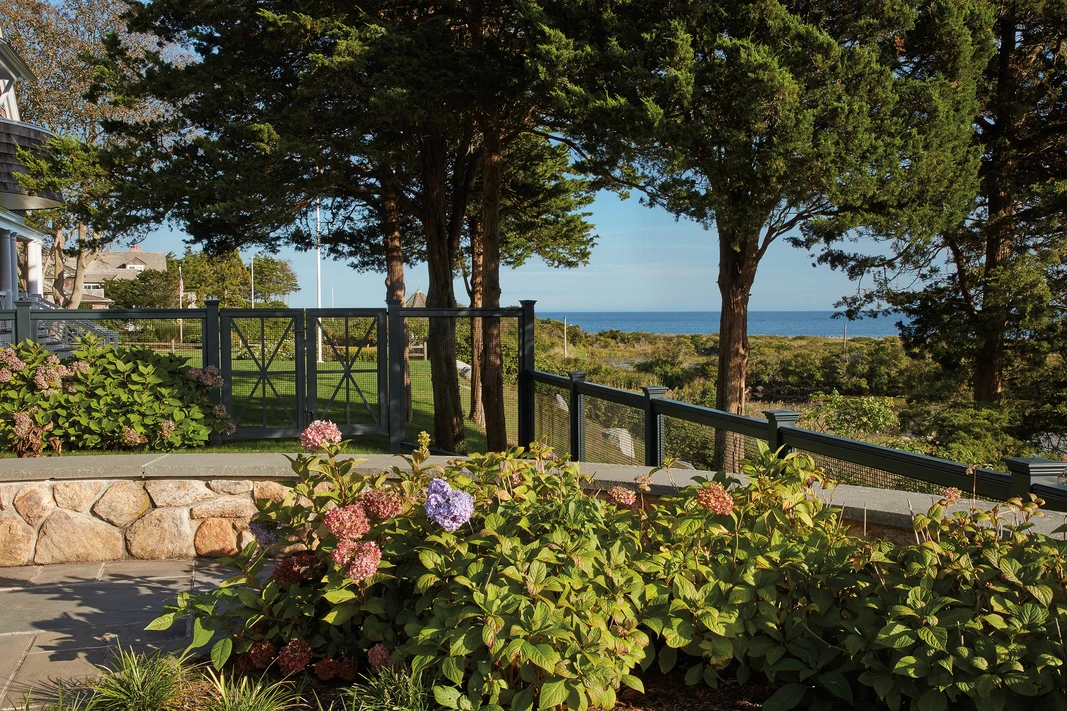
Residential fencing does more than define a property line.
The right fence can create privacy, improve security, define outdoor spaces, frame gardens, guide guests, and add lasting curb appeal to your home. For many homeowners, choosing a fence starts with a practical need. Maybe the backyard needs more separation, the garden needs more structure, or the driveway needs a gate. But the best residential fencing solutions also support the overall look and feel of the property.
From privacy fencing and garden fencing to decorative fencing and perimeter fencing, Walpole Outdoors offers design-forward solutions that help homeowners create outdoor spaces that feel more complete, polished, and intentional.
What Residential Fencing Is and Why It Matters
Residential fencing refers to fence systems designed for homes, yards, gardens, driveways, patios, pools, and larger residential properties. Depending on the application, it can provide privacy, improve security, define outdoor spaces, or enhance curb appeal.
A fence is often one of the most visible outdoor design elements on a property. It can influence how the home looks from the street, how outdoor spaces feel from inside the yard, and how different areas of the landscape connect.
That is why residential fencing should be considered part of the overall outdoor design plan. A fence can create separation, but it can also add rhythm, proportion, and architectural character.
Walpole Outdoors designs fencing solutions that help homeowners define outdoor spaces while complementing the architecture of the home through crafted solid cellular vinyl, fine-milled wood, and sturdy aluminum options.
Privacy Fencing for Creating Separation and Comfort
Privacy fencing is one of the most common reasons homeowners invest in a residential fence. It can help create a more comfortable backyard, separate neighboring properties, and make patios, pools, and outdoor dining areas feel more secluded.
A privacy fence does not have to feel heavy or plain. With the right design, it can create screening while still contributing to the overall look of the landscape. Board fencing, lattice accents, decorative toppers, and thoughtfully planned layouts can all help balance privacy with visual interest.
Privacy fencing is especially useful along rear property lines, side yards, pool areas, and spaces where homeowners want to reduce direct views from nearby homes or streets. It can also help define outdoor rooms, making larger yards feel more organized and usable. For a softer option, lattice fencing can provide a more open sense of semi-privacy while adding texture and depth to the landscape.
Security Fencing for Controlled Access and Peace of Mind
Security fencing helps homeowners manage access to the property while creating a more defined boundary. It can be used around front yards, rear yards, driveways, pools, side entrances, and larger perimeter areas.
The right security fencing should feel protective without making the property feel closed off. Open metal fencing, estate-style fencing, and coordinated gate systems can help create a secure boundary while preserving visibility and curb appeal.
Security fencing is often most effective when paired with gates. A fence can define the perimeter, while walk gates and driveway gates control how people enter and move through the property.
For front-facing areas, homeowners may want fencing that feels welcoming and architectural. For rear or side areas, privacy and controlled access may matter more. The best residential fencing plans consider both the security needs of the space and the functional purposes of each part of the property.
Garden Fencing for Structure and Landscape Definition
Garden fencing can bring order, beauty, and definition to planting areas. It can frame flower beds, protect vegetable gardens, guide walkways, and create a clear edge between planted and open spaces.
A garden fence can be decorative, functional, or both. Picket fencing can add a classic garden look. Post-and-rail fencing can create a more open, estate-inspired boundary. Lattice fencing can support climbing plants while adding architectural texture.
Garden fencing is especially helpful when a landscape has multiple zones. It can separate a kitchen garden from the lawn, define a walkway, or turn a simple planting area into a more intentional garden room. Walpole Outdoors’ guide to garden fence ideas highlights styles like picket, post-and-wire, lattice, and rail fencing for homeowners looking to enhance their landscape with structure and sophistication.
Decorative Fencing That Enhances Curb Appeal
Decorative fencing can make a home feel more finished from the street. While it may not always be intended for full privacy or security, it can add charm, rhythm, and architectural detail to the front of a property.
A decorative fence can frame a front yard, border a garden, accent a walkway, or create a more graceful transition between the home and the street. It can also be used in smaller sections rather than as a full enclosure.
This is where design details matter. Fence height, picket shape, post caps, gate style, spacing, and color can all affect the final look. A simple fence may feel clean and understated. A more detailed design may feel traditional, formal, or estate-inspired.
Modern Residential Fencing Ideas and Styles
Modern residential fencing often emphasizes clean lines, simple profiles, and careful spacing. Instead of feeling overly ornate, modern fence design tends to focus on proportion, rhythm, and restraint.
Horizontal layouts, streamlined gates, geometric patterns, and minimalist silhouettes can all give a fence a more contemporary appearance. These designs work especially well with modern homes, updated landscapes, and outdoor spaces that use stone, metal, glass, or simple planting schemes.
Modern fencing can still be warm and inviting. The key is balance. A clean design should feel intentional, not unfinished. Details like post spacing, cap selection, gate alignment, and material choice help determine whether the fence feels polished. For homeowners exploring modern fence design ideas, the goal is to choose a fence that supports the property without overwhelming it.
Metal and Aluminum Fencing for Residential Use
Metal and aluminum fencing are often used when homeowners want a defined boundary with a more open view. These fence types can work well around pools, front yards, estates, driveways, and larger properties where visibility matters.
Unlike full privacy fencing, metal fencing can create separation without blocking sightlines. That makes it useful when homeowners want security, structure, and curb appeal while still keeping the landscape visible.
Aluminum fencing offers a more refined alternative to traditional wrought iron-style designs. It is commonly used for perimeter definition, pool enclosures, walk gates, and residential settings where a slim, durable fence profile is preferred.
For homeowners comparing fence types, the right choice often depends on how much visibility, privacy, and architectural presence the space requires.
Perimeter and Estate Fencing for Larger Properties
Perimeter fencing helps define the outer edges of a property. On larger lots, it can create a strong sense of arrival, establish boundaries, and bring visual continuity across long stretches of land.
Estate fencing often needs to do more than simply enclose space. It should feel proportional to the size of the property and coordinated with entrances, gates, driveways, landscaping, and the architecture of the home.
For large residential properties, consistency matters. A fence that changes abruptly from one area to another can make the landscape feel disconnected. Coordinating fence style, height, material, and gate design helps create a more unified appearance.
Perimeter fencing can also vary by function. A front-facing stretch may be more decorative and open, while side or rear boundaries may require more privacy or security.
Fencing With Gates for Seamless Property Access
Fencing with gates is essential when a property needs both enclosure and access. Gates allow people, cars, equipment, and guests to move through the fence line while keeping the overall system connected.
Walk gates are commonly used for garden entries, side yards, pool areas, and paths. Driveway gates are used at property entrances and can create a stronger sense of arrival. On larger homes and estates, gates often become one of the most visible design elements on the property.
The fence and gate should feel like one system. Matching materials, proportions, post styles, hardware, and decorative details can help the design feel seamless. Walpole Outdoors’ driveway gates are crafted to complement many fence styles, including picket, board, and historical replication designs, with options for walk gates, driveway gates, estate gates, and entrance gates.
Residential Fencing Options: How to Choose the Right Fence for Your Home
Choosing the right residential fencing starts with understanding what the fence needs to do. Privacy, security, garden definition, curb appeal, and property access may all influence the final decision.
Start by considering where the fence will go. A front yard fence may need to feel decorative and welcoming. A backyard fence may need to create more privacy. A garden fence may need to define a planting area without blocking views. A perimeter fence may need to coordinate across a much larger property.
Next, think about the style of the home. The fence should feel connected to the architecture, not separate from it. A traditional home may call for classic pickets or lattice details, while a more modern property may benefit from cleaner lines and simpler profiles.
Finally, think about how the fence will perform over time. A fence should support how the property is used now while continuing to look appropriate as the landscape matures.
For homeowners looking to combine privacy, security, and style, residential fencing from Walpole Outdoors can help create outdoor spaces that feel more defined, more functional, and more complete.